- Finding your Clear Voice
- Posts
- The Gatekeeper
The Gatekeeper
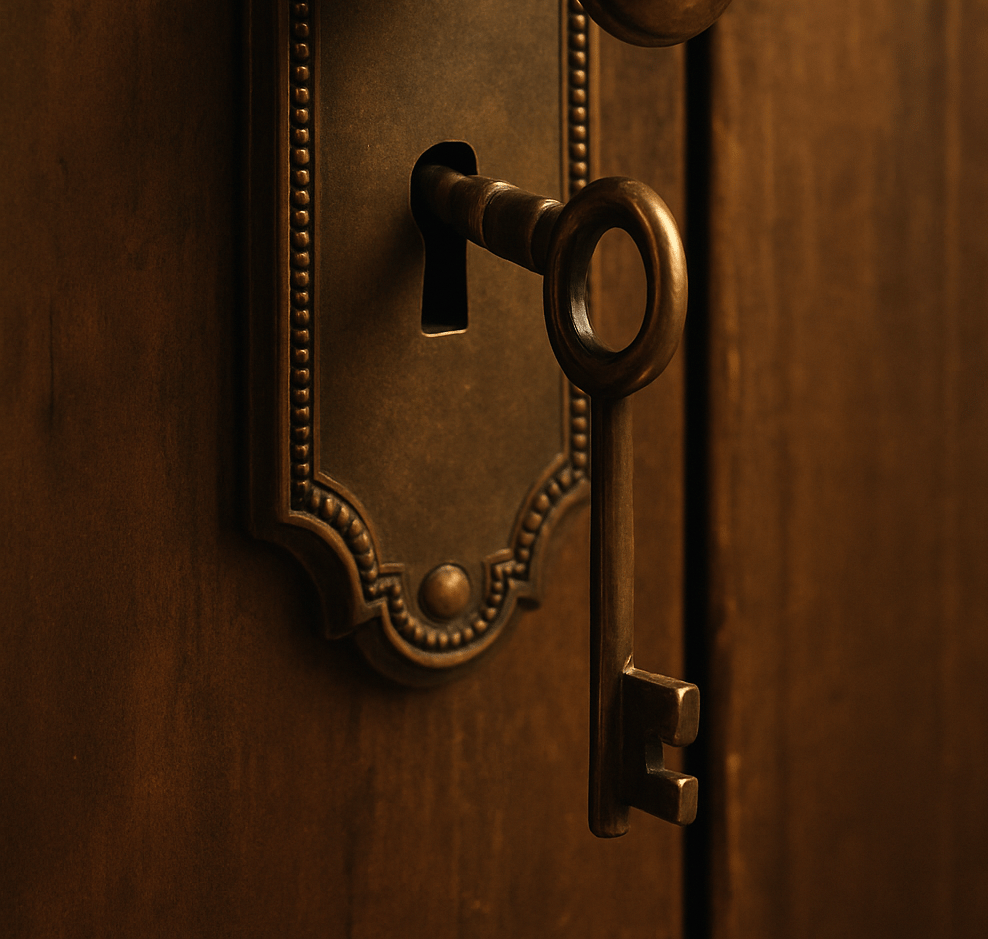
Choose your gatekeeper wisely — When Power Mistakes Control for PurposeWho would you trust with the keys to your house?
Zahra Uddin
October 07, 2025
In every space — digital or real — someone decides who gets to belong.
There’s always a gatekeeper.
Sometimes they wear a badge; other times, they hide behind an algorithm.
You might never see their face — or maybe you will — but you’ll always feel their presence in the silence after a soft block.
And then there’s blacklisting — the formalised version of soft blocking.
It’s when exclusion becomes policy, written down somewhere you’ll never see.
It’s not just one person’s decision anymore; it’s collective denial, quietly agreed upon.
You don’t get told you’re on the list — it just evolves, through passive aggression, until you stop receiving a place you already hold, or the chance to keep it.
That’s when gatekeeping shifts from personal insecurity to institutional power.
We like to think merit speaks for itself — that if you work hard, stay authentic, and show integrity, the right doors will open.
But in reality, every system has its gate — and every gate has someone deciding who gets to walk through.
The danger isn’t the gate itself; boundaries are natural.
The danger is when the gatekeeper mistakes control for purpose.
When moderation turns into bias.
When preference becomes prejudice.
When they convince themselves they’re protecting something sacred — but really, they’re just protecting their ego.
Sometimes gatekeeping looks moral — framed as “values,” “standards,” or “community guidelines.”
But strip away the polished language and you’ll find the same old human insecurities: fear of difference, fear of being challenged, fear of losing authority.
And here’s something I’ve noticed: those who gatekeep the hardest often have the least to lose.
They hide behind anonymity, algorithms, or policy — not because they’re principled, but because exclusion is their only power.
Control feels safest when it can’t be questioned.
Soft blocking, silent removals, hidden bans — they all serve the same purpose: invisibility without accountability.
It’s the digital version of pretending not to hear someone knocking at your door.
It’s fine not to open your own door — that’s personal, that’s your right.
But what matters is the excuse.
Maybe you didn’t hear it, or maybe you just didn’t want to answer.
The issue is when the service doesn’t serve.
If a platform wants to be exclusive, it should be honest about it — say who you’re for, and who you’re not for.
Exclusivity isn’t the problem; the problem is when someone weaponises it to protect their own insecurities.
Transparency might sting, but it’s at least human.
Pretending everyone is welcome while quietly removing those who don’t “fit” is moral theatre — and it’s everywhere now, dressed up as professionalism, safety, or vibe.
Gatekeepers exist in every system — social, corporate, religious, creative.
But the healthiest ones are curators, not controllers.
They protect a standard without playing God.
They know how to say no without making someone disappear.
That’s why it matters who holds the gate.
Because gatekeepers decide more than access — they decide culture.
They shape who gets visibility, who gets heard, and who learns to stop trying.
A careless gatekeeper doesn’t just exclude individuals; they distort the ecosystem itself.
They build echo chambers, reward conformity, and punish authenticity — all while believing they’re maintaining “quality.”
Choosing the right gatekeepers means choosing empathy over ego.
It means trusting those who understand that authority is stewardship, not superiority.
Because when you pick the wrong ones, you don’t just lose fairness —
you lose the soul of the space you’re trying to protect.
Real authority doesn’t need to hide.
And real community doesn’t fear being challenged.
So the next time you find yourself at a locked door, remember — not every closed gate means you’re unworthy.
Sometimes it just means the gatekeeper is.
The moral of the story: choose your gatekeepers wisely.
The best ones are mysterious yet trustworthy — discerning enough to protect, humble enough to listen.
Choose yours like you’d choose someone to hold the keys to your house.